
Second Generation Lean Product Development: Applying the Principles of Flow
A Two-Day Seminar
Description
Many companies are enthusiastically adopting Agile and Lean methods in their product development processes. While some management fashions are temporary, Agile and Lean are likely to persist. Why? They provide proven, practical way to simultaneously achieve large improvements in the speed, quality, and cost of product development.
But what makes these methods work? What should you pay to remove cycle time from the critical path of programs? How much do you have to lower transaction cost to enable smaller batches? What are the economic consequences of loading engineering to very high levels of utilization?
If you want to beyond the slogans and understand the economics and science behind Agile and Lean, you may be interested in this workshop. It is taught by the author of the award-winning book, The Principles of Product Development Flow: Second Generation Lean Product Development. It will introduce you to both science and practical methods.
It draws upon ideas from a variety of domains including queueing theory, telecommunication network design, computer operating systems, and lean manufacturing.
It is intended to provide a solid exposure to some of the many important ideas underlying Agile and Lean methods, including:
- Developing an Economic Framework: How to quantify the financial impact of improvements in cycle time, cost, and quality.
- Managing Queues: How to control the invisible and unmanaged queues that hurt cycle time, efficiency, and quality.
- Understanding Variability: How to reduce the economic damage done by variability while keeping the benefits of innovation.
- Reducing Batch Size: Using batch size reduction as tool to reduce queues and improve feedback.
- Applying WIP Constraints: How WIP constraints and other WIP control strategies improve cycle time, efficiency and quality.
- Controlling Flow: Using cadence, synchronization, and work sequencing to improve flow.
- Using Fast Feedback: How to design feedback and control systems that make a difference.
- Decentralizing Control: Balancing the advantages of centralized and decentralized control.
Don Reinertsen
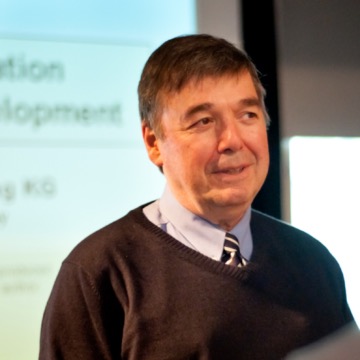
Don is the President of Reinertsen & Associates, a consulting firm specialized in the management of product development. He has worked with leading product development organizations for over 30 years, and taught executive courses at Caltech for 14 years. He is the author/co-author of three best-selling books on product development. His latest awarding winning book, The Principles of Product Development Flow: Second Generation Lean Product Development, has been praised as, “… quite simply the most advanced product development book you can buy.”
Agenda
Day 1 AM (0830 to 1200)
- An overview of how lean techniques improve product development speed, quality, and cost
- An understanding of the critical differences between product development and manufacturing
- How to develop an economic framework to assess waste, calculate cost-of-delay, and analyze queues.
- How to use economic decision rules to improve decision making.
- Case problem on project economic model
Day 1 PM (1300 to 1700)
- How to measure queues and quantify their economic impact
- Case problem on analyzing queues
- Tools for managing queues
- Using option pricing theory to understand the economics of variability
- The importance of creating payoff asymmetries
- Creating Antifragility in development processes
- Information theory and the creation of optimum failure rates
- The importance of small batch size and how to achieve it
- The ten most common batch size problems in product development
- Small group work on batch size opportunities.
Day 2 AM (0830 to 1200)
- How WIP constraints smooth flow in manufacturing
- The economic logic behind WIP constraints
- Various methods of WIP control
- The effects of congestion and how to manage it
- How a regular cadence reduces variance and improves flow
- Using cadence in product development processes
- How synchronization reduces product development queues
- Why non-homogeneous flows need different sequencing strategies
- How to base sequencing on economics
- The use of Weighted Shortest Job First (WSJF) prioritization
Day 2 PM (1300 to 1630)
- Why fast feedback is critical
- How feedback permits development processes to reduce the effect of variability
- Managing the product payload dynamically
- Why decentralized control is so critical
- Decentralization lessons learned in the military
- Maintaining alignment without micromanagement
- How to initiate pilot programs and scale them up
- Developing a plan for immediate next steps
- Final questions and answers
Master Class - Principles of Flow
A two-day seminar to learn how to manage and orchestrate development projects following advanced Lean principles with Don Reinertsen
It will be held in Paris, the tuesday 10 and wenesday 11 of december just before Flowcon.
Contact us if any question by email or on the contact form
Pour les français et la formation professionnelle, contactez nous à cette adresse flow-workshop-2022@flowcon.fr
Sold out